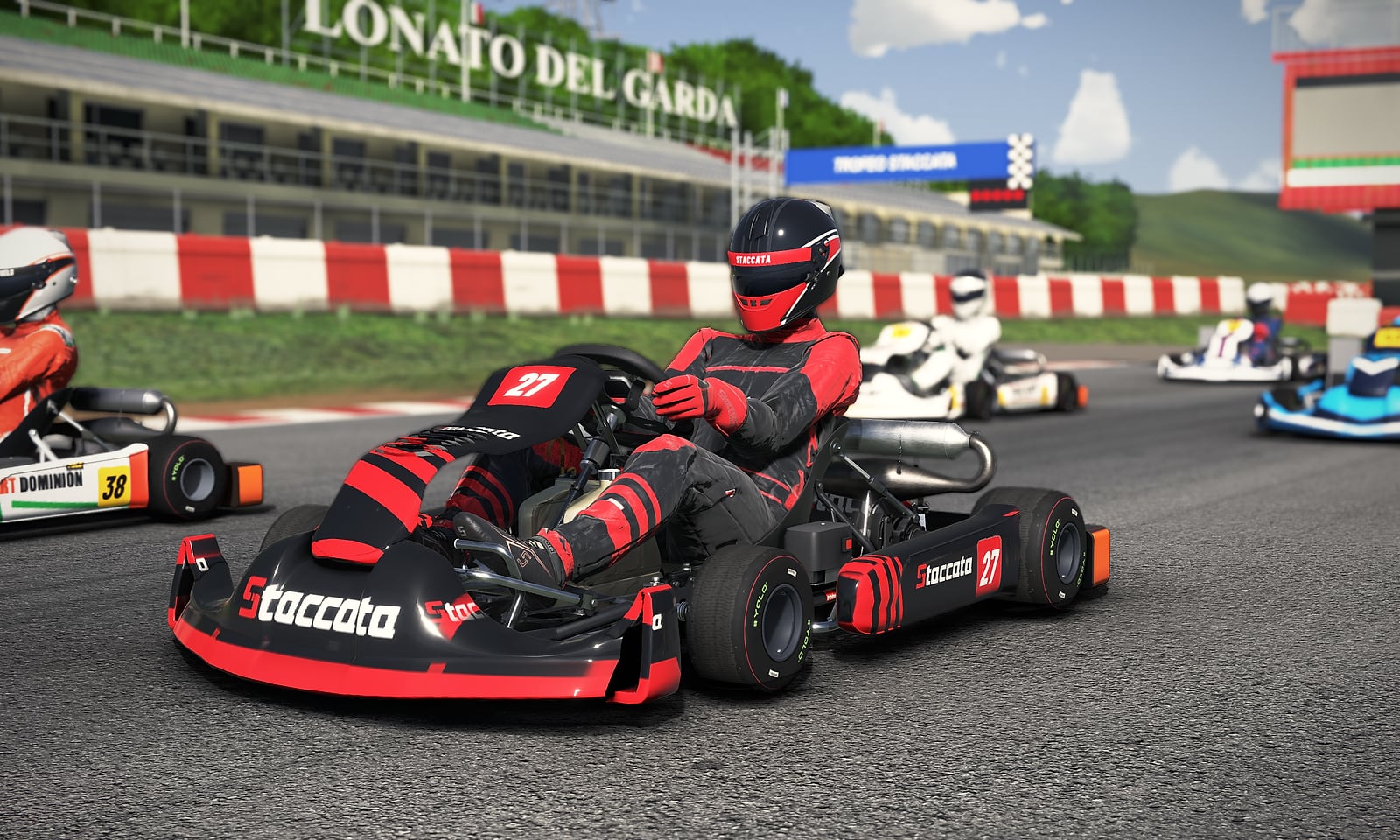
Karting classes are defined by three things: the driver's age, the engine specification, and a minimum weight for kart plus driver. Get those three right and the rest of the paperwork follows. This lesson walks the ladder from an eight-year-old's first kart to a 35 to 40 kW shifter, then shows what your country does its own way.
Drill
Class comparison
Goal: 2 valid laps each with A and B, then compare
| Class | Roughly who and what |
|---|---|
| Micro / Bambini | Around 7–10 years. Small chassis, heavily restricted 60 cc engine. Low speeds, huge learning value. |
| Mini | Around 8–12 years. 60 cc or restricted 125 cc depending on the series. First taste of real racecraft. |
| Junior (Rotax Junior / OK-Junior) | Around 12–15 years. 125 cc, restricted power, lower minimum weight than Senior. |
| Senior (Rotax Max / X30 Senior) | Around 14/15 years and up. 125 cc TaG (touch-and-go): electric start, centrifugal clutch, single speed. |
| DD2 | Around 15 years and up. 125 cc Rotax with a two-speed gearbox on the rear axle and front brakes. Very fast, relatively cheap to run. |
| OK / OK-Junior | The CIK-FIA direct-drive classes. High-revving, soft tyres, open engine choice among homologated units. The international ladder toward single-seaters. |
| KZ2 / KZ | Around 15 years and up. 125 cc shifter with a six-speed gearbox and front brakes. The fastest karts most people will ever drive. |
Minimum weights climb with the class: roughly 110 kg for the smallest categories, around 145–150 kg in Junior, 160–170 kg in Senior, and 170–180 kg for DD2 and KZ2. If a driver is light, ballast is bolted to the seat or the chassis to reach the minimum. That is normal and legal, as long as the ballast is properly secured; scrutineers check it.