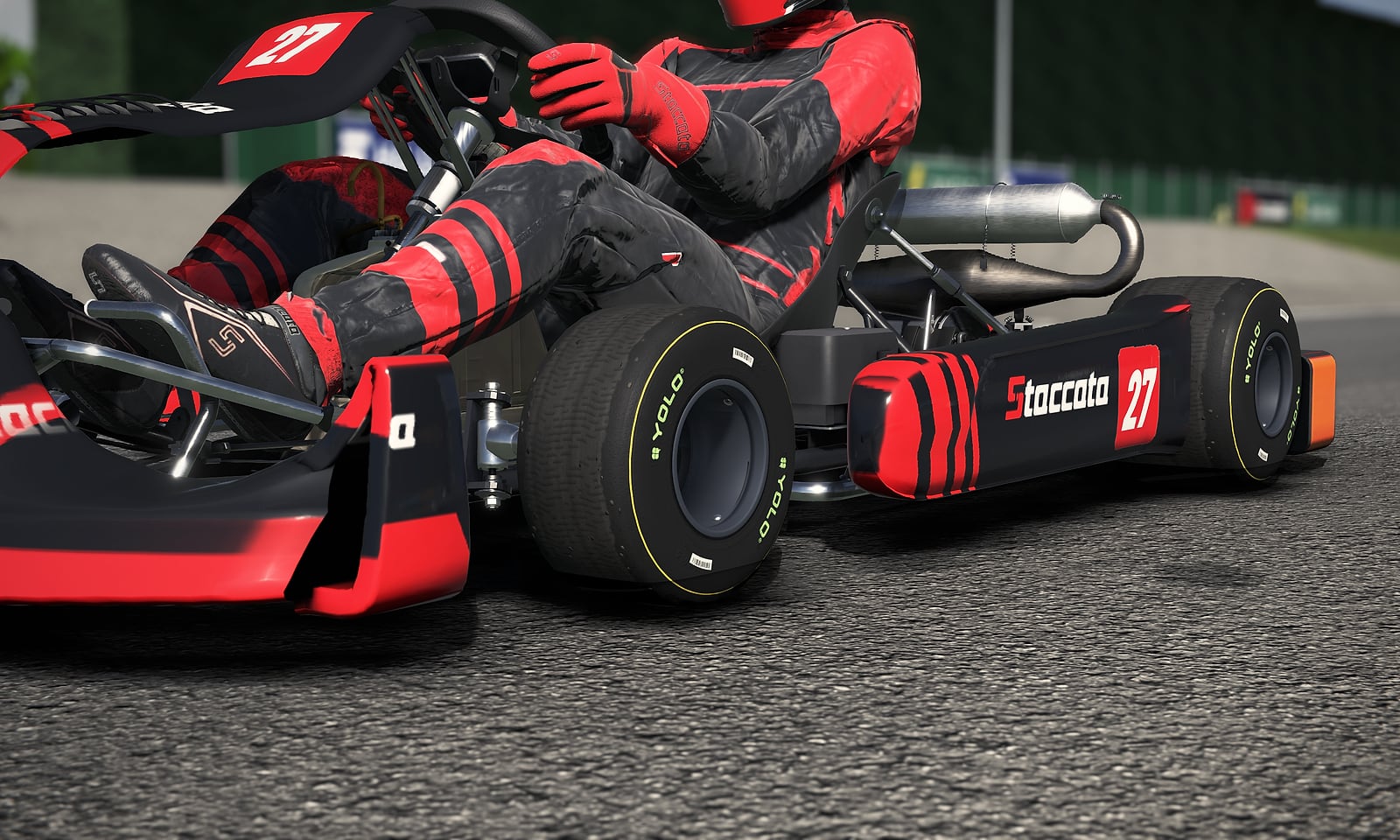
The front geometry of a kart is adjusted with eccentric inserts (pills) around the king pins and with the length of the track rods. Three angles come out of that: caster, camber and toe. They are often confused, so here is the clean version.
Drill
Caster
Goal: 2 valid laps each with A and B, then compare
Caster is how far the king pin leans backward at the top, seen from the side, the same idea as the forks on a bicycle. It is the main source of the jacking effect that lifts the inside rear wheel. More caster means the inside front pushes down harder when you turn, lifting the inside of the chassis and twisting the frame more.
- More caster: stronger, faster turn-in; more inside-rear lift; more self-centring and noticeably heavier steering; more front tyre wear. Reach for it on cold, green or wet tracks where you need to force grip.
- Less caster: lighter steering, calmer turn-in, less jacking. Use it on a high-grip track where the kart already rotates too easily or binds.
- Caster is usually the first geometry change in the wet, and often the single most effective one.