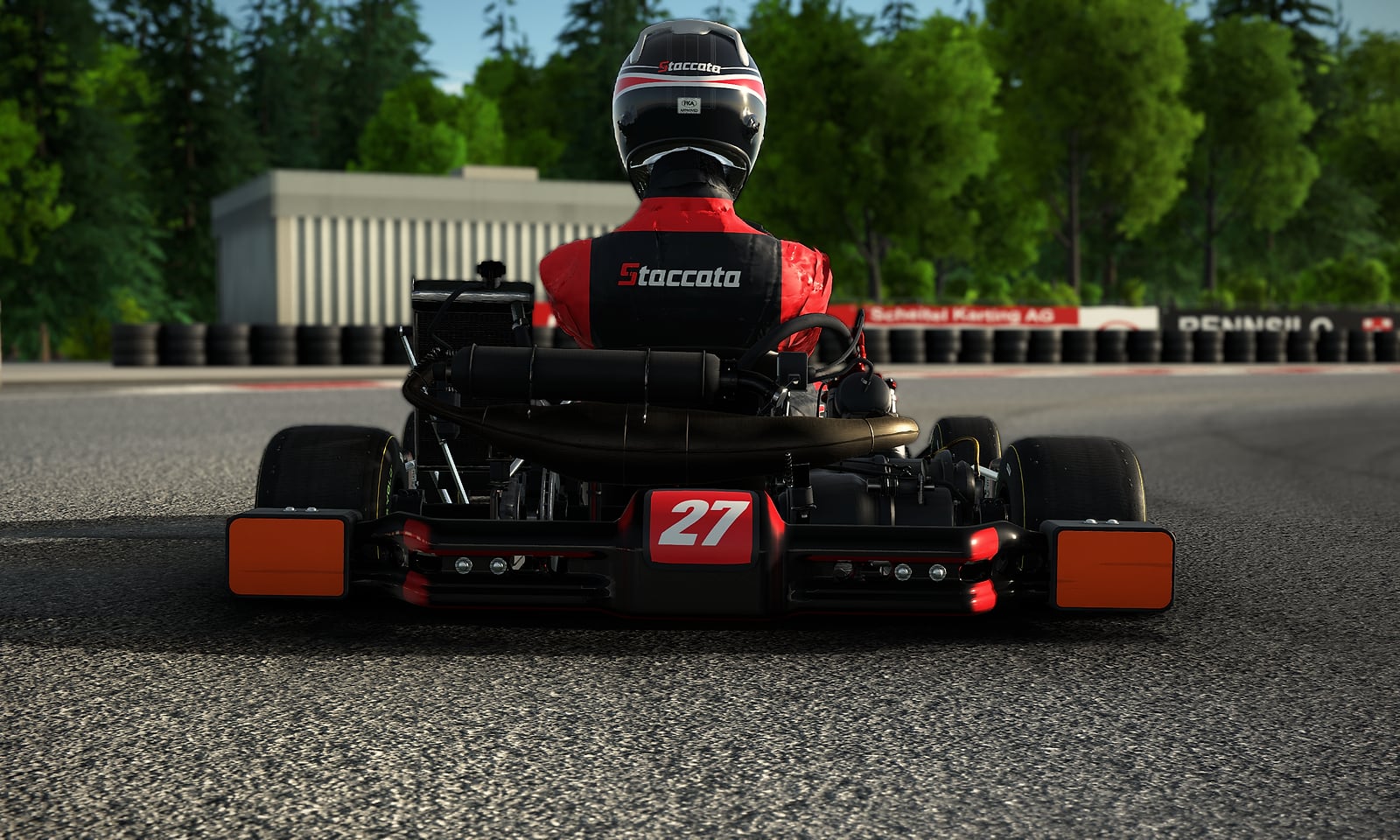
Track width (the distance between the outsides of the tyres on an axle) is adjusted at the front with spacers between the stub axle and the hub, and at the rear by sliding the hubs along the axle. It takes five minutes with two spanners and it changes the kart more than almost anything else. It also has the clearest rules of thumb in kart setup, which makes it the ideal place for a beginner to start experimenting.
Rear track
Goal: 2 valid laps each with A and B, then compare
At the rear you control how free or calm the rear is. Regulations usually cap the kart's overall width at 1400 mm, and in the dry most people run the rear somewhere between about 1360 mm and the legal maximum. Think of the rear axle as a lever: the wider it is, the harder the chassis finds it to lift the inside rear, and the less weight transfers onto the outside tyre. The rear gets calmer. The narrower it is, the sooner the inside rear goes light: the rear gets freer and the kart rotates more. (Manufacturer manuals often describe it the other way round, narrower = more rear grip; Staccata follows its measured physics model.)
| Change | What you get |
|---|---|
| Wider rear (toward 1400 mm) | A calmer rear. The inside rear stays down longer: the kart hops less and the rear stops stepping out on exit and turn-in, but the kart pushes more on the front tyres. The standard fix when the rear slides on exit or the kart hops. |
| Narrower rear | A freer rear. The inside rear goes light sooner, the kart turns in more and stops bogging on exit. Quicker on a green, cold or wet track; once rubbered in it hardly gains anything in the game. Overdo it and the kart starts to hop. |
| 5 mm per side | A meaningful, feelable step. That is the size of change to make, not 30 mm. |
| Wet (heavy rain) | Narrower: Sodikart gives 1370–1380 mm for the wet against 1400 mm in the dry; other chassis often go narrower still. The kart has to rotate on wet asphalt too, and the stiffer rear helps it do that. |