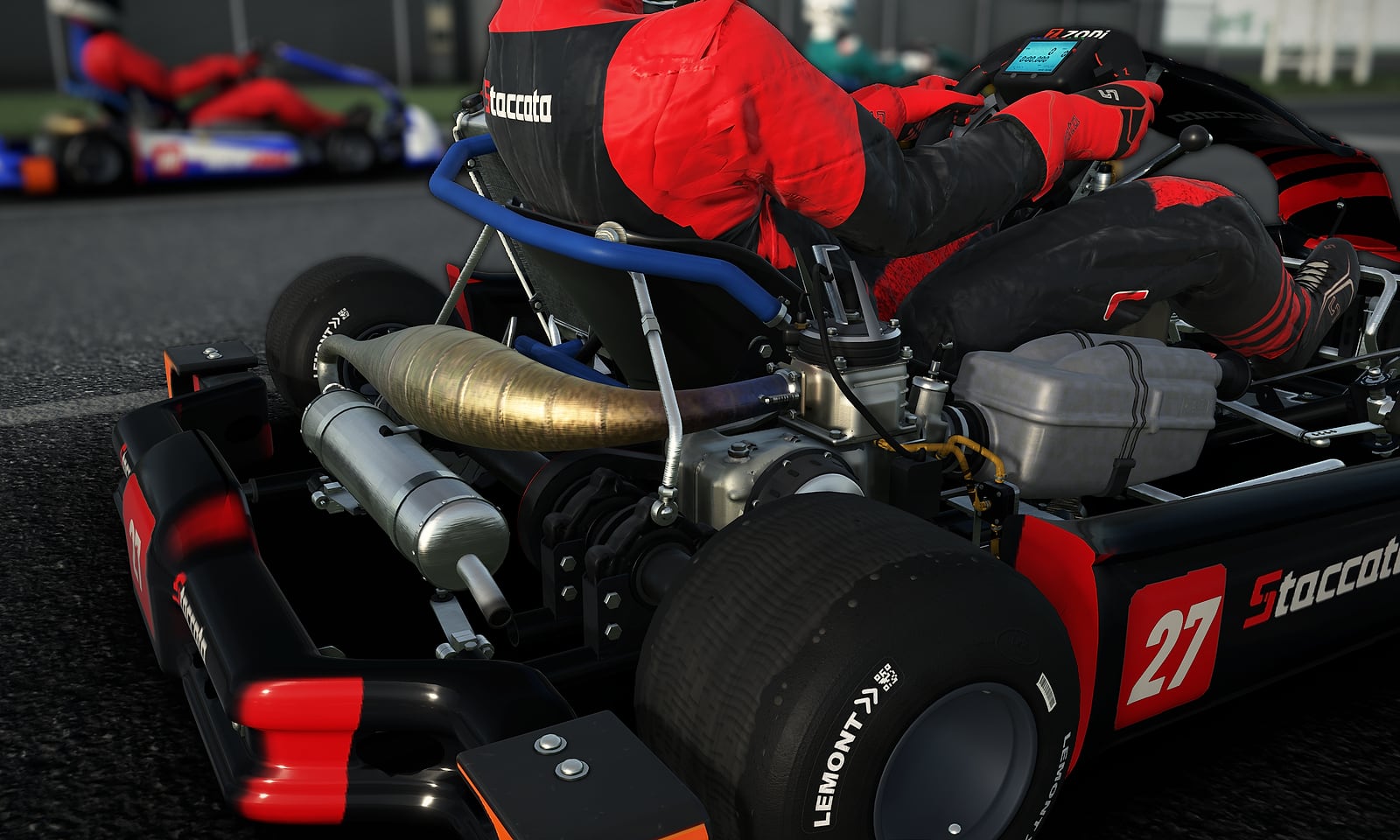
Kart engines are single-cylinder two-strokes of about 125 cc that produce between roughly 10 and 35 kW depending on class. They are loud, they rev hard, they are mechanically simple, and they are entirely unforgiving of neglect. Understanding the basics keeps you out of the two expensive failures: a seizure and a missed rebuild.
There are no valves and no camshaft. The piston itself uncovers and covers ports in the cylinder wall as it moves. One up-stroke draws fresh mixture into the crankcase while compressing the charge above the piston; one down-stroke both produces power and pushes fresh mixture up through the transfer ports, sweeping the exhaust gases out. That is one power stroke every revolution, which is why a 125 cc two-stroke can out-power a much larger four-stroke.
Two consequences matter to you. First, the fuel carries the oil: there is no oil sump, so lubrication comes from the pre-mixed oil in the fuel. Get the mix wrong and the engine dies. Second, the exhaust is part of the engine. The expansion chamber uses a reflected pressure wave to stuff escaping mixture back into the cylinder, and that only works in a narrow rpm band. That band is your power band, and gearing is how you live in it.