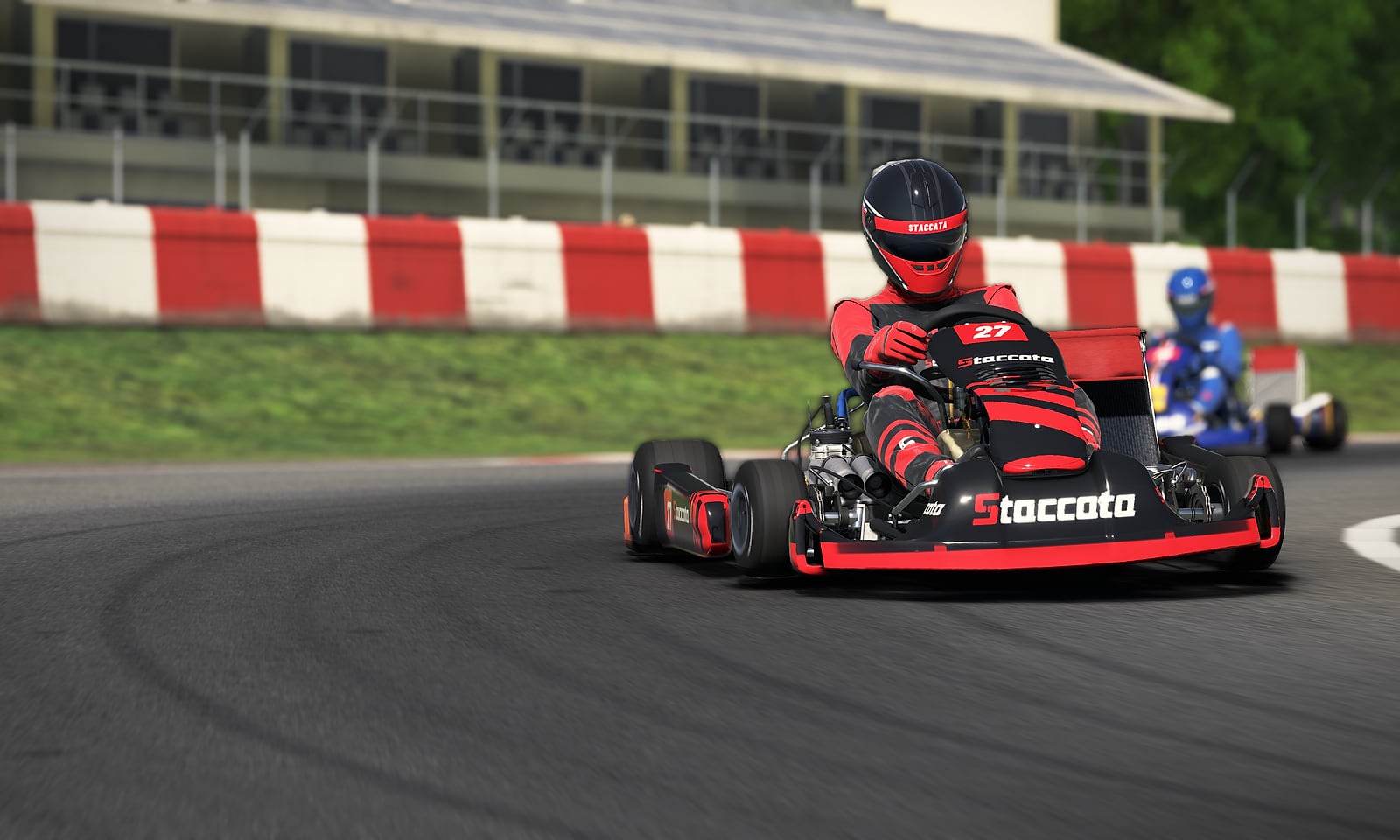
If you understand only one thing about kart setup, make it this one. Everything in the setup track (track width, caster, camber, axles, seat stays, ride height, pressures) exists to control how much the inside rear wheel lifts, how quickly it lifts, and how quickly it comes back down.
Caster and track
Goal: 2 valid laps each with A and B, then compare
A car has a differential so the outside wheel can turn faster than the inside one through a corner. A kart does not: both rear wheels are welded, in effect, to one solid axle and must rotate at exactly the same speed. In a corner the inside wheel travels a shorter path, so it wants to turn more slowly than the outside wheel. It cannot. The result is that one of the two rear tyres must scrub, fighting the turn. The kart understeers, the rear tyres overheat, and lap time disappears.
The solution designers chose is simple and slightly brutal: lift the inside rear wheel off the ground for the part of the corner where the conflict is worst. With the inside wheel in the air, the axle is effectively driving a single rear wheel, the conflict vanishes, and the kart rotates.